




New rentals are shrinking in Toronto, Vancouver
December 5, 2022
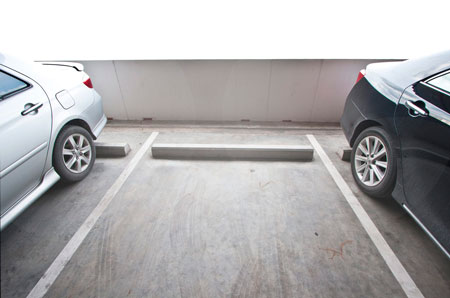
New Burnaby rental units are smaller than three regular parking stalls. | Submitted
Concord Pacific and U.K.-based Grosvenor are among residential developers now developing some of the smallest new rental units in Canada.
Concord’s Metrotown development in Burnaby, a Metro Vancouver suburb, will include 58 non-market studio rentals that are between 323 square feet and 346 square feet—a bit smaller than three standard-sized parking stalls.
It’s also more than 75 square feet smaller than the development’s market strata studios which range from 399 to 528 square feet, and 182 square feet smaller than their market rental studios which start at 505 square feet.
The development’s eight non-market adaptable studio units are set at 385 square feet.
(Non-market refers to units rented at below local market value usually through a government subsidy; adaptable usually refers to sliding wall partitions in a studio to separate a sleeping space. In this case, units fall 20 per cent below market value. The current market rent for a studio unit in Metrotown is $996, according to Canada Mortgage and Housing Corp.)
The minimum size for Concord’s rental units is 322.9 square feet (30 square metres).
Burnaby City Councillor Pietro Calendino asked for staff to report on minimum unit sizes for both strata and rentals earlier this year, according to Burnaby Now.
“A 330 [square-foot] foot bachelor unit is not a livable place. A 450 [square-foot) one-bedroom is a very tiny space,” Calendino said.
“Obviously, we are concerned with affordability, but affordability should come with a degree of livability as well.”
Grosvenor’s latest residential development in Burnaby includes 36 rental studio units at 328 square feet, nine units at 365 square feet, and 97 market rental studios between 381 and 394 square feet, according to Burnaby’s survey.
Burnaby Mayor Mike Hurley said, “That’s a ridiculous size to have to live in, in my opinion…It’s time to revisit that and make sure it doesn’t happen again. That’s tiny.”
The director of planning, however, told council that by the time developments are ready for public hearing, “the floor plans are pretty much set.”
In Toronto, apartment sizes have been shrinking for the past 20 years. Although new micro units make up a small fraction of the Greater Toronto condo market, sales of condo units below 400 square feet have been slowly on the rise over the past 10 years—from just under 0.6 percent of all condo sales in 2011 to 1.6 per cent of sales in 2021, according to Storeys.
The majority of the small units end up on the rental market, because most mortgage lenders won’t lend conventional buyers the money for such tiny spaces. As in B.C., the bulk of these small condos are purchased by investors who then rent them out.