




U.S. ‘green’ community shrugged off Hurricane
November 9, 2022
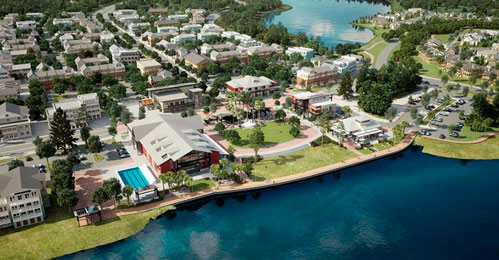
When Hurricane Ian roared into southeast Florida on September 23, 2022, it knocked out power for millions of residents, caused an estimated US$50 billion in damage and nearly destroyed cities such as Naples and Fort Myers.
But less than 20 kilometres from Fort Myers, the 2,000-home master-planned community of Babcock Ranch road out the Category 4 hurricane without loss of power and with minimal damage. The day after the storm, which packed 160 km-per-hour winds, Babcock residents were sheltering hurricane victims from other towns.
How did Babcock Ranch survive? The community bills itself as America’s “first solar-powered town.” Power comes from a giant 350-acre solar field with 700,000 individual panels that generates more electricity than the neighbourhood uses.
The streets in the planned neighborhood were designed to flood so houses don’t. Native landscaping along roads helps control storm water. Power and internet lines are buried to avoid wind damage. And all houses are built to Florida’s robust building codes.
Some residents installed more solar panels on their roofs and added battery systems as an extra layer of protection from power outages. Many already drive electric vehicles, taking advantage of solar energy in the Sunshine State.
The storm should serve as a wake-up call, said Michael Sanchez, a spokesman for GeoSolar Technologies, a Colorado startup. GeoSolar claims to have developed a plug-in-play energy retrofit package for detached houses.
It’s concept, SmartGreen Home. can retrofit existing homes just as easily as it can be deployed in new homes, according to Sanchez. The technology includes roof solar panels, ground-source heat pumps and Led lighting and air filtration systems in a single package to make house self-sufficient.
For more information on climate-friendly homes in Canada, visit Natural Resource Canada.