




Concrete and wood construction compared
September 29, 2021
Giatec Scientific
It costs more to build low-rise residential in concrete versus wood frame, but there are deeper reasons when choosing between these top two residential building materials.
In Canada’s biggest markets, the price difference in low-rise construction is negligible.
According to Altus Group’s 2021 Construction Cost Guide, it would cost from $195 to $265 in hard costs to construct a six-storey condo building in Toronto—exactly the same as the cost to build a wood-frame building of the same size. In Vancouver, the difference is about $20 per square foot higher with concrete compared with building six-storeys in wood frame.
But concrete has major advantages in construction, according to a Science Direct study which claims concrete has become the second-most used material in the world—behind water.
Concrete is a durable fire-and-water resistant material that will never rust, will absorb and retain heat and provide soundproofing—the building material of choice in much of the world.
It is also heavier and more difficult to work with and usually more expensive and slower than wood-frame construction, but a condo in a concrete-built building normally achieves a higher-price point than one in a wood-frame building in the same location.
On green aspects, concrete’s ability to retain heat will increase the energy-savings in a Canadian building—which can reduce costs. Concrete produces little waste because it can be produced in specific batches.
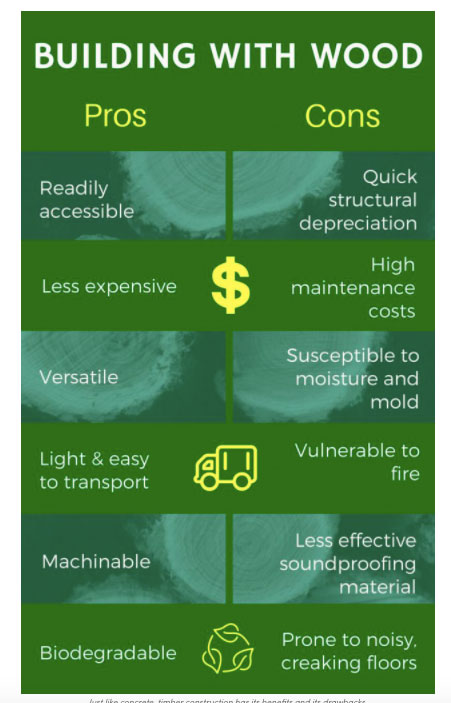
Wood, on the other hand, is a renewable resource and it stores carbon dioxide—which reduces greenhouse gas emissions. But, wood is susceptible to water damage, mold and decay, according to Ottawa-based Giatec Scientific,which specializes in concrete construction.
The major advantage of wood comes down to a quicker construction cycle in either single-family or low-rise residential construction. This speed, combined with lower costs—now that lumber prices have come down from record highs earlier in 2021—should mean wood will remain the leading material in Canadian home building.
Building codes in much of Canada now allow structures higher than six storeys to be built out of engineered mass-timber materials that overcome limitations on soundproofing and vertical strength.
Choosing concrete or wood-frame construction methods will come down to carefully balancing costs and performance.