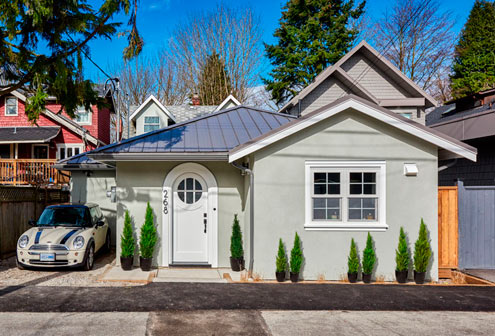
As Toronto considers rezoning to allow laneway houses on single-family lots in the city, tax officials are cautioning the detached rentals may have an affect on the principal residence tax exemption that all Canadian homeowners enjoy.
The warning flag was raised after Canada Revenue Agency ruled that, for the first time, Canadians have to report the sale of a principal residence on their 2017 tax returns.
Vancouver and some Metro Vancouver municipalities already allow laneway houses and Ottawa and Hamilton are considering them. The concept passed first reading in Toronto and East York councils in June, though it has not yet been approved.
Basically, a laneway house is a detached residence, usually around 500 square feet, that can provide low-density rental housing in urban neighbourhoods and help homeowners cover their mortgage payments.
However, the portion of a principal residential property used to generate rental income could be subject to capital gains taxation when the property is eventually sold, according to tax experts.
“When the entire property is eventually sold any gain realized on the laneway house portion will not be eligible for the principal residence exemption,” stated to an analysis done for the Real Estate Board of Greater Vancouver by tax advisor Grant Thornton. “The owner is required to track all costs associated with building the laneway house as well as keep records related to the original cost of the property, capital improvements made, the relative value of the land versus the main residence on the date of the deemed disposition and on the date of sale.”
If one assumes that the house owner is at the top marginal tax rate, the capital gains tax would be 23.8 per cent, so a $200,000 gain in value would result in a tax of $47,500, explained William Cooper, a tax lawyer with Boughton Law.
homeBUILDERcanada.com | Home BUILDER Magazine | Canada's #1 Information Source for Residential Home Builders and Professional Renovators